Eliminate Underground Obstructions Before Building Starts
Stump Removal & Root Grubbing in Odessa for sites where construction requires complete underground clearance
A stump sitting above ground level tells you nothing about the root mass spreading several feet in every direction beneath the surface. XD Land Management provides stump removal and root grubbing in Odessa, addressing the underground obstruction that interferes with foundation work, utility trenching, and driveway installation. Heavy excavation equipment extracts the entire root system, leaving a clean cavity that fills with compacted soil rather than decaying wood that settles unevenly over time, which matters when you plan to pour concrete or run water lines through the area.
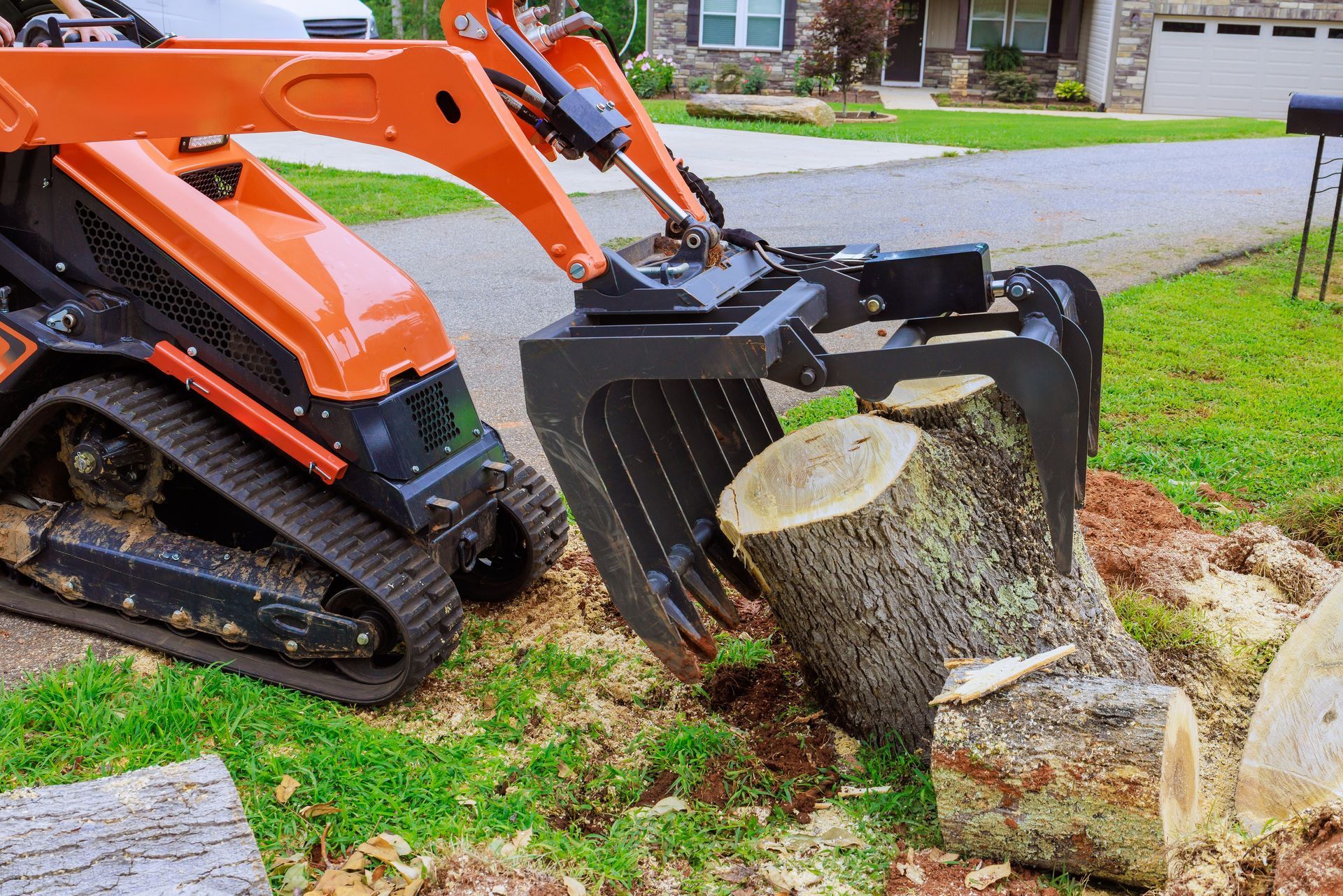
Root grubbing differs from stump grinding, which only removes the visible portion above ground while leaving roots in place to decompose slowly over years. Complete removal involves digging around the stump, severing major roots, and lifting the entire mass out of the ground using excavator buckets or grapples. The process creates a larger hole initially, but it eliminates the risk of voids forming as wood breaks down, which can cause settling under driveways, patios, or foundation edges.
Schedule an evaluation before beginning new construction to identify stumps and root masses that need extraction based on your site plan.
What Proper Root Removal Requires
Full root grubbing requires excavating several feet below the stump depending on root depth and spread, which varies by tree species and soil type. Operators expose the root ball, cut through major lateral roots using hydraulic attachments, and lift the entire system free from the ground. In West Texas caliche soils, roots often spread horizontally rather than driving deep, so extraction involves wider excavation rather than extremely deep digging.
Once roots are removed, you see a clean excavation cavity that gets backfilled with native soil or imported fill, then compacted to match surrounding grade. The site no longer contains decaying organic material that creates voids, allows water infiltration into unexpected areas, or interferes with equipment trenching for utilities. Foundations, driveways, and underground lines install without encountering hidden roots that damage equipment or force costly rework.
Stump grinding remains an option when the area will not support structures or underground utilities, since it removes the visible obstruction quickly and costs less than full extraction. The ground settles gradually as roots decompose, which works for landscaping or areas that will remain undeveloped. Builders and developers typically choose root grubbing for any site where structural integrity and long-term stability matter more than initial cost savings.
Common Questions About This Service
Property owners preparing for construction often ask about the difference between removal methods and what to expect during the work.
How deep do roots need to be removed for foundation work?
Most residential foundations require root removal to at least three to four feet below final grade, ensuring no organic material remains within the load-bearing zone where settling would cause cracking.
What happens to the excavation hole after the stump is removed?
The cavity gets backfilled with soil, then compacted in layers to prevent future settling, leaving the area ready for grading or construction activity without low spots or soft zones.
Why does root grubbing cost more than stump grinding?
Complete removal requires larger excavation equipment, more labor time, and soil handling to backfill the cavity, whereas grinding only removes the visible stump with a smaller machine and minimal site disturbance.
When should stump removal happen in the construction timeline?
Removal occurs during site preparation before any grading, foundation work, or utility installation begins, allowing contractors to work on a clean site free of underground obstructions.
How do you handle stumps in areas with limited equipment access?
In tight spaces, smaller excavators or alternative methods may be used, though access limitations can affect project cost and timeline depending on stump size and root structure common to Odessa's native vegetation.
XD Land Management evaluates site conditions, identifies stumps requiring removal based on your construction plans, and coordinates the work to fit your project schedule. Contact the team to discuss equipment access, timeline requirements, and soil handling for your site preparation needs.