Build on Stable Ground With Controlled Drainage
Site Grading & House Pad Prep in Odessa for construction sites requiring stable foundations and water management
Uneven ground and poor drainage cause foundation problems before construction even begins, with water pooling near footings or soft spots creating differential settling under slabs. Site grading and house pad prep in Odessa establish stable building surfaces with controlled slopes that direct runoff away from structures. XD Land Management operates grading equipment to cut high spots, fill low areas, and create level pads where foundations will sit, paying attention to soil compaction and elevation consistency that prevent water infiltration and structural movement. Builders notice a prepared site where layout work proceeds without fighting terrain, footings pour on solid ground, and drainage functions as designed rather than creating surprises during the first rain.
Proper grading involves more than pushing dirt around until the site looks flat—it requires establishing consistent elevations across the pad, sloping surrounding areas at controlled gradients, and ensuring compacted fill supports the loads imposed by foundations and hardscaping. In West Texas, where caliche layers often sit near the surface and rainfall arrives in concentrated bursts, managing subsurface stability and surface drainage determines whether a building pad performs reliably over decades or develops cracks and settlement within the first few years.
Request site evaluations to assess existing grades, soil conditions, and drainage requirements before foundation contractors arrive on your property.
What Proper Grading Helps Accomplish
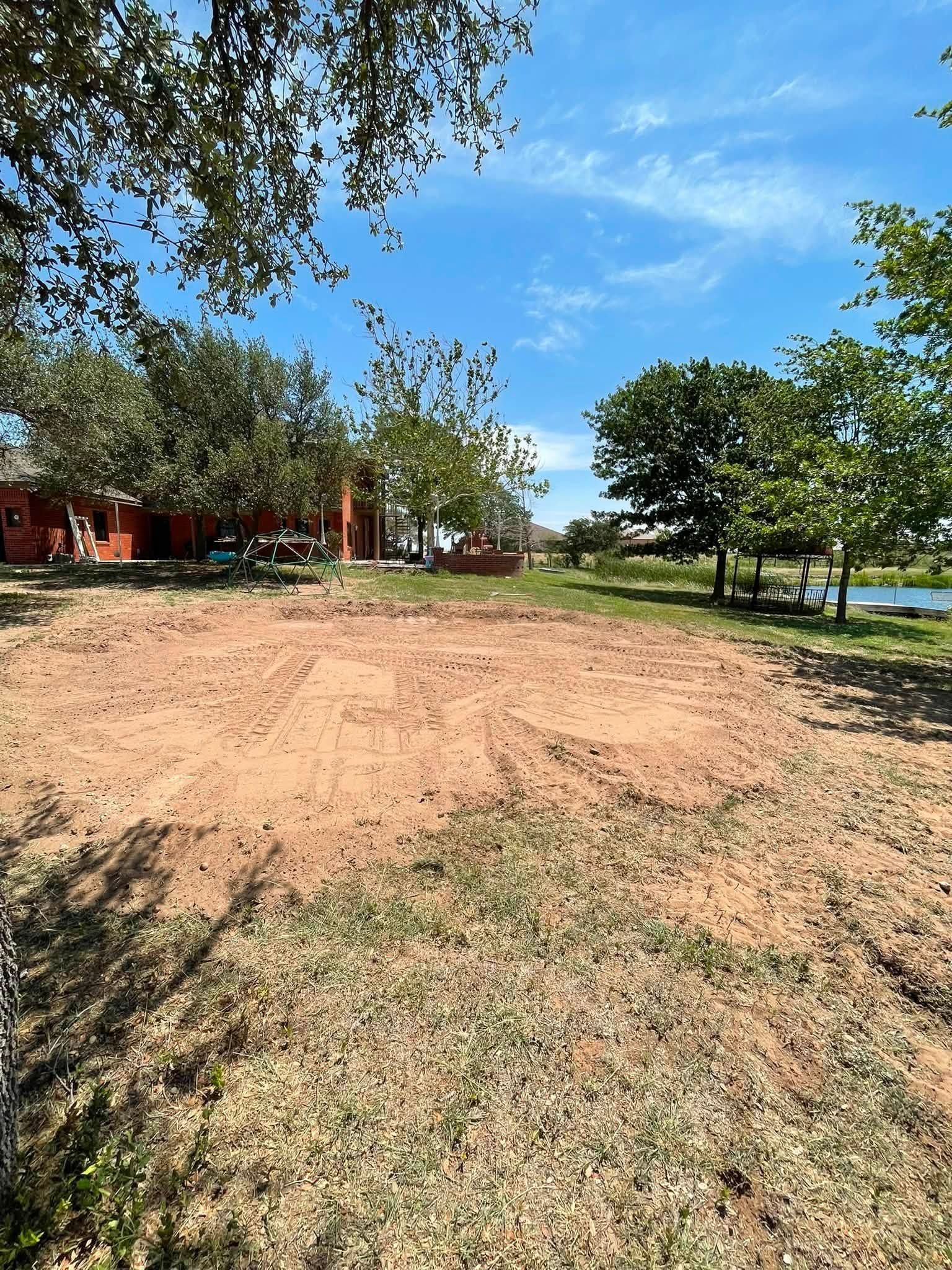
Grading work begins with clearing vegetation and debris, then cutting or filling to reach design elevations based on foundation plans and drainage analysis. Operators use laser-guided or GPS equipment to maintain accuracy across the pad, ensuring the surface remains level or slopes according to engineered specifications. Finish grading smooths the surface and compacts soil to density levels that prevent settling, creating a stable base where concrete forms sit flat and drainage patterns function as intended.
Once grading completes, the building pad sits at the correct elevation relative to property boundaries, access roads, and utility connection points. Water moves away from the foundation area rather than collecting in low spots, and the ground remains firm under foot traffic and equipment loads during construction. Foundation crews work more efficiently when the site arrives ready for layout and forming, without needing to adjust grades or fill unexpected voids.
Rough grading establishes general elevations and drainage flow, while finish grading refines the surface to tighter tolerances required for slabs and footings. Some projects require both phases, with rough grading completed early in site development and finish grading scheduled just before foundation work begins. Soil type, existing grades, and how much cut or fill is needed all affect project duration and equipment requirements, with caliche excavation taking longer than softer soils common in other regions.
Answers to Frequent Service Questions
Builders and property owners preparing for construction often ask about grading requirements and what to expect during site preparation.
What is the difference between rough grading and finish grading?
Rough grading establishes approximate elevations and drainage slopes across the site, while finish grading brings the building pad to precise elevations required for foundation work, typically within a few inches of design specifications.
How does grading prevent water from pooling near foundations?
The pad is graded higher than surrounding areas, with controlled slopes directing runoff away from the building footprint, reducing hydrostatic pressure against foundations and preventing erosion around slab edges.
When should site grading occur in the construction timeline?
Rough grading happens early during site development after clearing, while finish grading occurs immediately before foundation contractors begin layout and forming, ensuring the surface remains undisturbed and compacted.
Why does soil compaction matter for building pad preparation?
Compacted soil supports foundation loads without settling unevenly, which prevents cracks in slabs and walls caused by differential movement, especially critical in areas with expansive clay or loose fill common around Odessa.
What equipment is used for accurate site grading?
Depending on project size and tolerance requirements, operators use dozers with laser or GPS guidance systems, motor graders for finish work, and compaction equipment to achieve specified density levels across the pad.
XD Land Management coordinates grading work with your construction schedule, ensuring the site is ready when foundation contractors need access. Call (432) 880-0348 to discuss elevation requirements, drainage design, and timing for your building pad preparation in the Permian Basin.