Surfaces Designed for Lasting Pavement Stability
Asphalt Paving & Driveway Resurfacing in Odessa for properties upgrading from gravel or repairing deteriorated pavement
Caliche base preparation, proper compaction, and hot-mix asphalt application determine whether paved driveways develop cracks and depressions within a few years or remain smooth and stable for decades. Asphalt surfaces that fail prematurely typically rest on inadequate bases or were laid without addressing drainage, allowing water infiltration that softens the subgrade and causes pavement to buckle or sink. XD Land Management handles complete asphalt paving from site preparation through final compaction for driveway installation, resurfacing projects, repairs, and commercial paving across Odessa, using durable materials and base preparation methods that support long-term pavement performance.
Paving projects involve excavating to depth where a compacted aggregate base can be installed, grading for positive drainage away from structures, and applying hot-mix asphalt in layers that bond together and cure into a unified surface. Resurfacing applies new asphalt over existing pavement that has surface wear but retains structural integrity, extending pavement life without the cost of full replacement. Base preparation is the most critical phase, as asphalt thickness and quality matter little if the foundation beneath shifts or settles unevenly.
Request paving estimates to compare installation costs, material options, and timing for residential or commercial projects.
What Proper Paving Requires
Site preparation begins with excavation that removes unstable soil, old pavement if present, and any organic material that would decompose and create voids beneath the new surface. A compacted aggregate base, typically six to eight inches thick for residential driveways, provides the load-bearing foundation that prevents asphalt from cracking under vehicle weight. Grading establishes slopes that direct water off the pavement and away from structures, as standing water accelerates surface deterioration and infiltrates cracks that expand during freeze-thaw cycles.
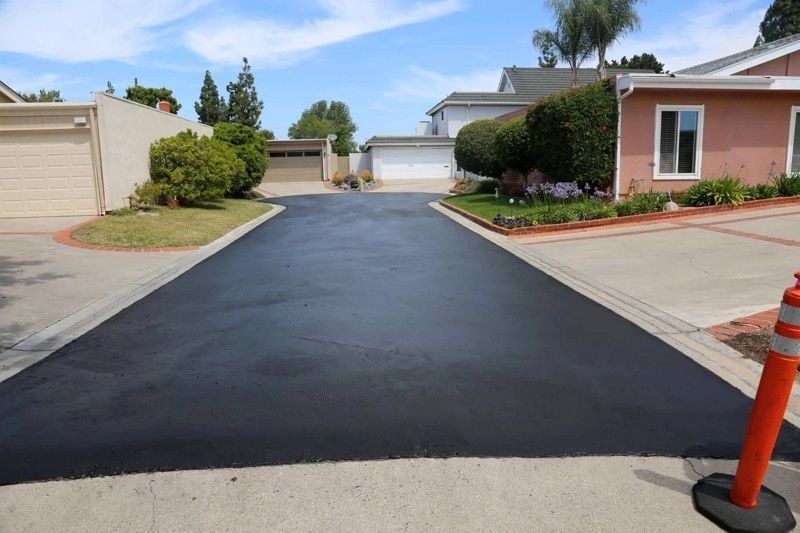
Once paving is complete, you'll see smooth finishes that improve curb appeal and eliminate the dust and loose gravel associated with unpaved drives, surfaces that remain intact under daily traffic without developing potholes or edge crumbling, and pavement that sheds water quickly rather than holding puddles that weaken the asphalt over time. Driveways become easier to maintain, requiring only occasional sealcoating rather than regular gravel replenishment, and vehicles track less debris into garages or onto adjacent paved areas.
Resurfacing addresses surface cracks, oxidation, and minor depressions on driveways where the base remains sound but the top layer has aged beyond effective repair. Repairs target isolated failures like potholes or edge breaks, removing damaged sections and replacing them with compacted base and new asphalt that matches the surrounding surface. Commercial paving projects include parking lots, access lanes, and loading areas, with thickness and material specifications adjusted for heavier vehicle loads and higher traffic volumes than residential drives experience.
Questions Before Starting Your Project
Homeowners and businesses considering asphalt paving ask about costs, timing, and how conditions in Odessa affect pavement longevity.
What base preparation prevents asphalt from cracking prematurely?
A well-compacted aggregate base distributes loads evenly and prevents localized settling that causes surface cracks, with thickness matched to expected traffic and subgrade stability.
How does West Texas heat affect asphalt performance?
High summer temperatures soften asphalt temporarily, making it more susceptible to deformation under heavy loads during peak heat, which is why proper base support and adequate thickness matter more in this climate than cooler regions.
When should resurfacing be done instead of full replacement?
Resurfacing works when the existing pavement has surface wear but no structural failures like widespread cracking, deep potholes, or base settlement that indicates underlying problems.
What thickness of asphalt is needed for residential driveways?
Two to three inches of compacted asphalt over a proper base handles typical residential traffic, with commercial applications requiring thicker layers depending on vehicle weights and frequency.
How soon can vehicles use newly paved surfaces?
Asphalt cures enough for light traffic within 24 to 48 hours, but full curing takes weeks, so avoiding heavy loads or sharp turns during the initial period prevents surface deformation.
XD Land Management coordinates paving projects for homes and businesses, ensuring base preparation and asphalt application meet standards for lasting performance and visual quality. Call (432) 880-0348 to schedule an estimate and discuss project details including size, access considerations, and preferred completion timing.